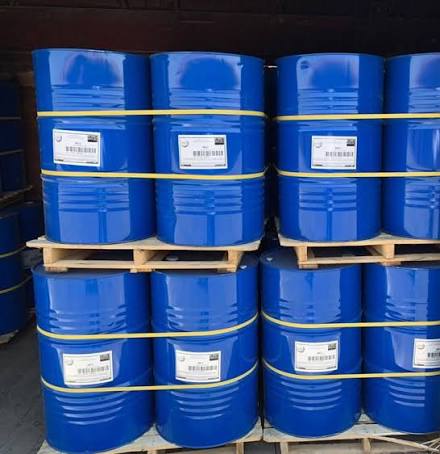


Liquid PEG


Polyethylene Glycol (PEG) Technical Specifications
Grades PEG-200 | PEG-300 | PEG-400 | PEG-600 | Sourced from Shazand Petrochemical | MizanPetroGas | 2026
| Property | Value | Unit | Method |
|---|---|---|---|
| Product Name | Polyethylene Glycol (PEG) | — | — |
| Chemical Formula | $H(OCH_{2}CH_{2})_{n}OH$ | — | — |
| IUPAC Name | Poly(oxyethylene) / Poly(ethylene oxide) | — | — |
| Polymer Type | Linear Polyether — Diol | — | — |
| Appearance | Completely transparent and colorless liquid | — | Visual |
| Solubility in Water | Complete solubility in all proportions | — | Visual |
| pH (5% Aqueous Solution @ 25°C) | 5.0–7.0 | — | ASTM E70 / pH Meter |
| Maximum Water Content | $\leq 0.5$ | wt % | Karl Fischer (KF) |
| Hydroxyl Value (OH Value) — PEG-200 | 535–590 | mg KOH/g | ASTM D4274 |
| Hydroxyl Value (OH Value) — PEG-300 | 355–395 | mg KOH/g | ASTM D4274 |
| Hydroxyl Value (OH Value) — PEG-400 | 267–295 | mg KOH/g | ASTM D4274 |
| Hydroxyl Value (OH Value) — PEG-600 | 178–196 | mg KOH/g | ASTM D4274 |
| HS Code | 39072090 (Polyethers in primary forms) | ||
| Origin Complex Producer | Shazand Petrochemical (Arak) | ||
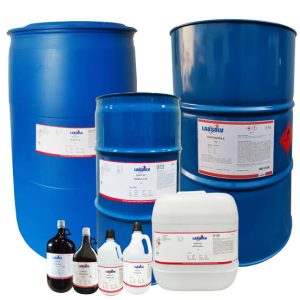
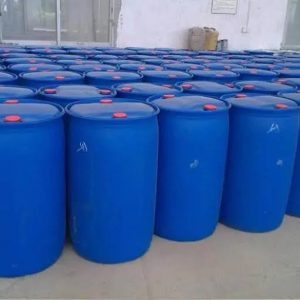
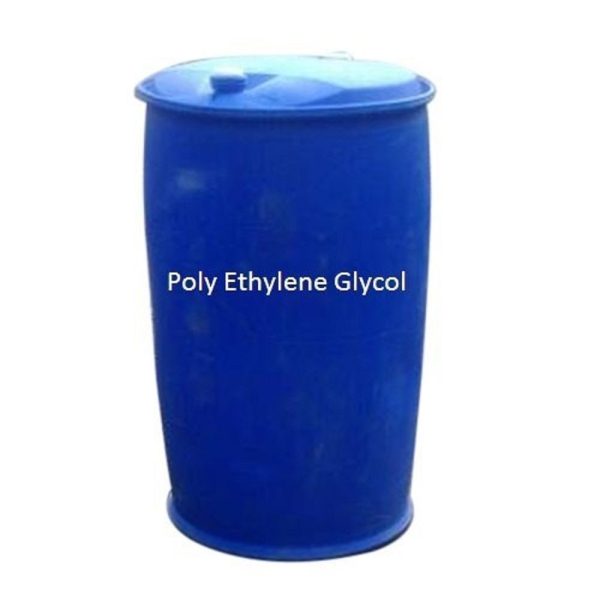
| Packaging | New 220-liter drum | 1000-liter IBC | Bulk | ||
| Storage Conditions | Dry, cool environment, away from direct light, tightly closed containers | ||
Technical Comparison of Liquid PEG Grades
| Property | PEG-200 | PEG-300 | PEG-400 | PEG-600 |
|---|---|---|---|---|
| Average Molecular Weight (MW) | 190–210 | 285–315 | 380–420 | 570–630 |
| Density @ 20°C (g/cm³) | ~ 1.124 | ~ 1.125 | ~ 1.126 | ~ 1.127 |
| Viscosity @ 20°C (cSt) | ~ 50–60 | ~ 70–85 | ~ 90–105 | ~ 120–135 |
| Pour Point (°C) | ~ -65 | ~ -40 | ~ -15 | ~ -5 |
| Flash Point (COC, °C) | ~ 175 | ~ 200 | ~ 235 | ~ 255 |
| Vapor Pressure @ 20°C (kPa) | < 0.01 | < 0.01 | < 0.01 | < 0.01 |
| Refractive Index ($n_{D}^{20}$) | 1.458–1.460 | 1.461–1.463 | 1.464–1.466 | 1.466–1.468 |
MizanPetroGas | 09155118932 | sell@mizanpetrogas.com | All grades available in stock
- Description
Description
Polyethylene Glycol (PEG)
$H(OCH_{2}CH_{2})_{n}OH$ | Water-Soluble Linear Polyether | PEG-200 to PEG-600 Grades | Sourced from Shazand Petrochemical | MizanPetroGas
Product Introduction
Polyethylene Glycol, commonly known in the industry as PEG, is a family of linear polyether polymers with repeating units of ethylene oxide ($-CH_{2}CH_{2}O-$). These compounds are synthesized through the polyaddition reaction of ethylene oxide (EO) with initiators such as monoethylene glycol (MEG) or diethylene glycol (DEG) in the presence of alkaline catalysts. The result of this process is a polymer with two terminal hydroxyl groups (diol) whose chemical and physical properties directly depend on the chain length ($n$) and average molecular weight.
Lower PEG grades — including PEG-200, PEG-300, PEG-400, and PEG-600 — appear at ambient temperature as completely transparent, colorless, odorless, and virtually non-toxic liquids. As molecular weight increases, viscosity rises and their pour point elevates, such that PEG-600 begins to cloud or solidify at temperatures below 5°C. The primary distinguishing feature of all PEG grades is their infinite solubility in water and compatibility with a wide range of organic solvents, including alcohols, acetone, chloroform, and toluene.
MizanPetroGas Company supplies Polyethylene Glycol with guaranteed quality and purity, sourced directly from Shazand Petrochemical (Arak) — as one of the most reputable domestic producers — available in new 220-liter drums, 1000-liter IBCs, and bulk packaging.
MizanPetroGas | 09155118932 | sell@mizanpetrogas.com — Stock available for all 4 low-grade PEGs
Pricing and Purchasing Polyethylene Glycol (PEG)
The price of PEG is determined by global ethylene oxide (EO) prices, exchange rate fluctuations, shipping and logistics costs, and the selected grade. Given domestic production at Shazand Petrochemical, purchasing PEG directly from MizanPetroGas provides significant advantages including eliminating intermediaries, competitive pricing, quality consistency, and continuous supply planning for industrial consumers. Contact our sales experts to inquire about daily prices for any grade and to receive cargo analysis.
Important Grade Selection Note: PEG-200 and PEG-300, due to lower viscosity, are suitable choices for solvents and dilute formulations. PEG-400 and PEG-600, with higher viscosity, offer superior performance in cosmetics, ointments, and semi-solid bases.
Molecular Structure and Technical Features
Polyethylene Glycol is a hydrophilic polyether with a linear structure and diol ($\alpha,\omega\text{-diol}$) terminals. The presence of oxygen atoms in the main chain (ether linkages) and terminal hydroxyl groups creates strong hydrogen bonding with water molecules, resulting in its unlimited solubility. This unique characteristic distinguishes PEG from many synthetic polymers.
Key Physicochemical Properties
- Complete solubility in water and most polar organic solvents
- Extremely low vapor pressure (virtually non-volatile at room temperature)
- Thermal stability up to 200°C (in the absence of oxygen)
- Balanced hygroscopic (moisture-retention) property
- Near-neutral pH (5–7)
- Non-corrosive and non-electrolyte
Formulation Performance Benefits
- Increases solubility of hydrophobic compounds in aqueous systems
- Acts as a lubricant and plasticizer
- Reduces evaporation and retains moisture in cosmetic formulations
- High biocompatibility and extremely low toxicity (GRAS status by FDA)
- Compatible with electrolytes, weak acids, and dilute bases
- No interference with most active pharmaceutical ingredients (APIs)
Applications and Target Industries
🏥 Pharmaceuticals
Solvent and ointment base, drug carrier, solubility enhancer for APIs, suppository base, osmotic laxative, protein PEGylation.
🧴 Cosmetics & Personal Care
Humectant in creams and lotions, emulsion stabilizer, softener in shampoos, toothpaste, deodorants, and skin care products.
🧹 Detergents & Household
Additive in liquid detergents, multi-surface cleaners, dishwashing liquids, fabric softeners, and surface care products.
🧱 Tiles & Ceramics
Deflocculant in ceramic slurries, temporary binder in green body molding, reduces friction and improves flowability.
🎨 Paints & Coatings
Plasticizer and flow improver in water-based paints, digital printing inks, and industrial coatings.
🧪 Chemical Industry
Raw material for synthesis of PEG esters, non-ionic surfactants (PEG esters, PEG ethers), and industrial lubricants.
📦 Textile Industry
Fiber lubricant in spinning processes, antistatic agent, fabric softener, and dye leveler.
🌾 Food Industry
Flavor and color carrier base, defoaming agent, lubricant for processing equipment (per FCC / Food Grade standards).
Packaging and Logistics
Bulk
Transported in stainless steel tankers (SS304/SS316) — suitable for high-consumption industries and large storage tanks.
220-Liter Drum
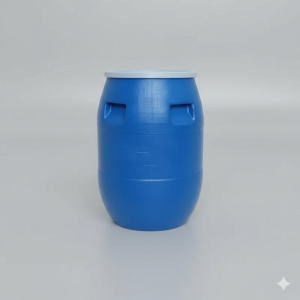
New HDPE or epoxy-coated metal drums — net weight 220 kg — 4 drums per pallet.
1000-Liter IBC
HDPE tanks with protective metal cage — ideal for medium-volume industrial consumers.
Export Shipping
Loadable in 20ft containers — compatible with all Incoterms (FCA, FOB, CFR).
Safety and Storage
- PEG is classified as non-hazardous material — does not require special transport permits.
- Store in tightly sealed containers in a dry, cool environment (10–40°C) with adequate ventilation.
- Keep away from direct sunlight, strong heat sources, and powerful oxidizing agents.
- PEG-400 and PEG-600 grades may become cloudy or semi-solid at low temperatures (< 5°C) — gentle warming (< 40°C) restores them to their original liquid state.
- Suitable storage tanks: Stainless steel (SS304/SS316), HDPE, PP, fiberglass — avoid unlined iron/galvanized tanks.
- PEG is inherently non-toxic and non-irritating. However, standard PPE (gloves, safety goggles) is recommended in industrial environments.
- Spills: Collect with inert absorbent materials — PEG is biodegradable, but large discharges into surface water should be avoided due to high BOD.
- Firefighting: Water fog, alcohol-resistant foam, dry chemical powder, $CO_{2}$.
Buy Polyethylene Glycol (PEG) — All 4 Grades Available
Inquire Daily Price | Receive Analysis & COA | Grade Selection Consulting | Supply in Drum / IBC / Bulk | Authenticity Guarantee (Shazand)
09155118932 — Direct WhatsApp Contact
sell@mizanpetrogas.com | Ex-Warehouse Delivery + Nationwide Shipping and Exports
PEG-200 | PEG-300 | PEG-400 | PEG-600 — MizanPetroGas © 2026