LPG
| Product Name | Liquefied Petroleum Gas (LPG) |
|---|---|
| Commercial / Trade Name | LPG — Industrial & Fuel Grade Liquefied Gas — Autogas |
| Chemical Formula | Mixture of Propane ($C_3H_8$) and Butane ($C_4H_{10}$) — with trace amounts of propylene and butylene |
| Grade | Industrial & Fuel Grade |
| Propane / Butane Ratio (Typical) | Customizable per client specifications — 30:70 (Summer) | 60:40 (Winter) | 100% Propane (Cold-Climate Export) |
| Liquid Phase Density @ 15°C | 0.50–0.58 g/cm³ (Propane $\approx$ 0.51 | Butane $\approx$ 0.58) — Lighter than water |
| Vapor Phase Density (Relative to Air) | Propane $\approx$ 1.55 | Butane $\approx$ 2.07 — Heavier than air — Accumulates in low-lying areas |
| Boiling Point | Propane: -42.0 °C | Butane: -0.5 °C — Variable based on blend ratio |
| Vapor Pressure @ 37.8°C | Max 1430 kPa — Controlled via propane/butane ratio |
| Flash Point | -104 °C to -60 °C (Extremely Low — High Flammability) |
| Auto-ignition Temperature | Propane $\approx$ 470 °C | Butane $\approx$ 405 °C |
| Explosive Limits in Air (LEL–UEL) | Propane: 2.1% – 9.5% by volume | Butane: 1.8% – 8.4% by volume |
| Total Sulfur Content | < 50 ppm — Sweetened / Desulfurized — Odorless (prior to odorization) |
| Stenching Agent (Odorant) | Ethyl Mercaptan (Ethanethiol) — Distinct warning odor detectable at $\leq 20\%$ LEL |
| Physical Appearance | Clear, colorless liquid under pressure — Colorless gas at atmospheric pressure — Soot-free standard combustion |
| Hazard Class (ADR / IMDG) | Class 2.1 — Flammable Gases — UN 1075 (LPG) | UN 1978 (Propane) | UN 1011 (Butane) — Packing Group: N/A |
| HS Code | 2711.12 — Propane | 2711.13 — Butane | 2711.19 — Other Liquefied Petroleum Gases |
| Origin Complex Producer | Persian Gulf Star Gas Condensate Refinery |
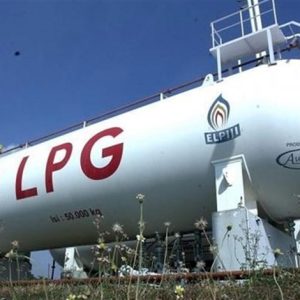
| Packaging & Transportation | Pressurized LPG Road Tankers — Standard DOT/ISO Cylinders — Mounded Bullets — VLGC Vessels for Export |
| Storage Conditions | Pressure vessels equipped with Pressure Relief Valves (PRV) — Away from heat, sparks, and static discharge — Continuous ventilation — Gas leak detection systems |
| Supplier | MizanPetroGas |
| Contact | 09155118932 (Direct WhatsApp Contact) |
- Description
Description
Liquefied Petroleum Gas (LPG)
Propane & Butane Mixture | Industrial & Fuel Grade | Persian Gulf Star Refinery | UN 1075 | Supplier: MizanPetroGas
Product Introduction
Liquefied Petroleum Gas (LPG) is one of the most versatile and strategic hydrocarbon energy sources in global trade, primarily composed of a mixture of propane ($C_3H_8$) and butane ($C_4H_{10}$). Under ambient conditions (standard atmospheric temperature and pressure), LPG exists in a gaseous state; however, under moderate pressure (approximately 8–10 bar) or refrigeration, it readily condenses into a liquid — a physical property that makes storage, long-distance transportation, and distribution highly efficient and economical. The liquid-to-gas expansion ratio is approximately 1:250, meaning one liter of liquid LPG expands into roughly 250 liters of gaseous fuel when depressurized.
The LPG supplied by MizanPetroGas Company is sourced directly from the Persian Gulf Star Gas Condensate Refinery — the largest gas condensate refining facility in the world. Characterized by an ultra-low sulfur content of under 50 ppm, complete absence of corrosive compounds, and zero heavy olefin contamination, this product serves as a clean-burning, high-efficiency, environmentally sound energy source. Compared to heavy liquid fuels such as heavy fuel oil and diesel, LPG significantly reduces $CO_2$, $NO_x$, and particulate matter emissions. The propane-to-butane blending ratio is fully customizable based on destination climate, seasonal temperature shifts, and operational requirements — ranging from winter grades with high propane ratios (60:40) for cold climates to summer grades with predominant butane content (30:70) for hot regions.
Leveraging an integrated supply chain, specialized pressurized gas logistics, and established international partners, MizanPetroGas supplies commercial volumes of LPG on FOB, CIF, and CFR terms from primary export terminals in southern Iran to regional and global markets.
MizanPetroGas | 09155118932 | sell@mizanpetrogas.com — Supply and export of LPG from Persian Gulf Star Refinery
Key Features and Advantages
🔥 High Calorific Value
46–51 MJ/kg — superior thermal efficiency compared to pipeline natural gas and standard liquid fuels — provides clean, complete combustion with minimal soot and zero ash.
🍃 Clean & Low-Emission Fuel
Total sulfur below 50 ppm — free of lead and heavy particulates — dramatically lowers $CO_2$, $NO_x$, and $SO_x$ emissions in compliance with international environmental standards.
📦 High Volumetric Energy Density
1:250 expansion ratio (liquid to gas) — minimal storage footprint — cost-effective transportation via pressurized road tankers, ISO tanks, and specialized gas carriers.
⚡ Instant & Complete Vaporization
Instantaneous flash vaporization at ambient pressure — no preheating or atomizing required — ensures uniform air-fuel mixing and steady flame patterns.
🔄 Tailored Propane / Butane Ratios
Custom formulations engineered for specific climates, seasons, and equipment — from pure export propane to balanced commercial mixtures for vapor pressure control.
🛡️ Odorized for Maximum Safety
Dosed with ethyl mercaptan (Ethanethiol) — distinct stenching agent enabling rapid leak detection at concentrations below 20% of the lower explosive limit (LEL).
Applications and Target Industries
🏠 Residential & Commercial Fuel
Clean thermal energy for cooking, space heating, and domestic hot water via cylinder networks or central storage tanks in off-grid areas.
🏭 Industrial Process Heating
Primary thermal fuel for furnaces, kilns, industrial boilers, and thermal dryers in ceramics, glass, metallurgy, and food processing sectors.
🚗 Automotive Fuel (Autogas)
Cost-effective, low-emission alternative fuel for taxi fleets, commercial delivery vans, industrial forklifts, and dual-fuel passenger vehicles.
🧪 Petrochemical Feedstock
Essential feedstock for steam crackers to synthesize primary olefins including ethylene, propylene, and butadiene.
🌾 Agriculture & Greenhouses
Energy source for greenhouse climate control, grain drying systems, irrigation water pumps, and controlled $CO_2$ enrichment for crop yields.
🚢 International Trade & Exports
Bulk shipments via Very Large Gas Carriers (VLGC) — high-volume commercial supply delivered to markets across Asia, Africa, and Europe.
Comparative Analysis: Propane vs. Butane
| Property | Propane ($C_3H_8$) | Butane ($C_4H_{10}$) |
|---|---|---|
| Boiling Point | -42.0 °C | -0.5 °C |
| Cold Weather Performance | Excellent — vaporizes freely in sub-zero conditions | Limited — fails to vaporize below -0.5 °C |
| Vapor Pressure @ 20°C | High (~ 850 kPa) | Low (~ 210 kPa) |
| Gross Calorific Value (Gravimetric) | ~ 46.4 MJ/kg | ~ 45.7 MJ/kg |
| Gross Calorific Value (Volumetric Gas) | ~ 93.6 MJ/m³ | ~ 121.8 MJ/m³ |
| Auto-ignition Temperature | ~ 470 °C | ~ 405 °C |
| Primary Application | Cold climates, autogas, export markets | Warm regions, indoor cooking, petrochemicals |
Transportation, Logistics and Delivery Terms
LPG must be transported and stored in certified pressure vessels (DOT/ISO/ASME compliant) equipped with Pressure Relief Valves (PRV), Emergency Shutoff Valves (ESV), and grounding connections. MizanPetroGas Company manages the end-to-end supply chain from the Persian Gulf Star Refinery to destination terminals — incorporating specialized pressurized road tankers, rail tank cars, and marine transport via VLGC vessels. Every consignment is supported by comprehensive documentation including Certificate of Analysis (COA), independent inspection reports (SGS / Bureau Veritas), Certificate of Origin (COO), Safety Data Sheet (SDS), and Tank Inspection Certificates. Standard delivery terms include FOB Bandar Abbas/Chabahar, CIF, CFR, and Delivered at Place (DAP).
Safety Considerations and Handling
⚠️ Safety Warning: Liquefied Petroleum Gas (LPG) is an extremely flammable gas (ADR Class 2.1 — UN 1075). Its vapor is heavier than air and tends to accumulate in low-lying areas, pits, trenches, and enclosed spaces, forming explosive vapor-air mixtures. Strict adherence to safety protocols is mandatory during loading, transport, discharging, storage, and consumption.
- Ignition Sources: Maintain a minimum safety distance of 15 meters from open flames, sparks, smoking materials, and non-explosion-proof electrical apparatus. All processing equipment and vehicles must be properly grounded and bonded. Use non-sparking tools exclusively in handling areas.
- Ventilation: Storage must be restricted to open-air areas or spaces equipped with explosion-proof mechanical ventilation providing at least 12 air changes per hour. Install LPG gas detectors at ground level (within 30 cm of the floor) linked to automatic alarms and emergency isolation valves.
- Personal Protective Equipment (PPE): Wear cryogenic insulated gloves when handling liquid transfers to prevent severe freeze burns. Safety goggles, full face shields, flame-retardant anti-static clothing, and static-dissipative safety boots are mandatory.
- Cryogenic Burn Hazard: Direct skin or eye contact with rapidly expanding liquid LPG causes instant cryogenic frostbite (-42 °C to -0.5 °C). In case of contact: flush immediately with tepid water and seek emergency medical treatment — never rub the affected area.
- Emergency Leak Response: Unignited leak: eliminate all ignition sources immediately, isolate and evacuate the area, and disperse gas clouds using water fog/spray (never use solid water streams). Ignited leak: do not extinguish the flame unless the gas feed can be isolated immediately (to avoid explosive vapor cloud accumulation); cool adjacent storage vessels with continuous water spray.
- First Aid: Inhalation: move victim to fresh air immediately and administer artificial respiration or supplemental oxygen if needed. Eye Contact: flush thoroughly with water for $\geq 15$ minutes and obtain immediate medical examination. Ingestion: not considered a normal route of exposure; never induce vomiting.
- Chemical Incompatibilities: Keep strictly segregated from strong oxidizing agents (chlorine, fluorine, peroxides, nitric acid, nitrates) and extreme heat sources to prevent violent or explosive reactions.
- Periodic Tank Inspection: Pressure storage vessels must undergo annual integrity inspections covering shell corrosion, valve operability, pressure relief setting, and structural coatings, accompanied by hydrostatic testing in compliance with international pressure vessel codes.
Price Inquiries and Order Execution
LPG commercial pricing fluctuates based on international propane and butane benchmark rates (Saudi CP, Mont Belvieu, ARGUS FEI), VLGC ocean freight rates, destination port tariffs, and agreed contract volumes. The commercial desk at MizanPetroGas provides transparent pricing structures, customized logistics planning across multimodal networks, and coordinated third-party inspection arrangements (SGS / Bureau Veritas) tailored to your required delivery terms (FOB / CIF / CFR / DAP).
Procure Liquefied Petroleum Gas (LPG) — Real-Time Quotations
LPG (Propane + Butane) Pricing | Industrial & Fuel Grade | Persian Gulf Star Refinery | FOB / CIF / CFR Delivery | Pressurized Tankers & VLGC
09155118932 — Direct WhatsApp Contact
sell@mizanpetrogas.com | Comprehensive Supply Chain & Technical Support
Liquefied Petroleum Gas (LPG) — Propane & Butane Mix — Persian Gulf Star Refinery — MizanPetroGas © 2026