Acetic Acid
| Product Name | Acetic Acid — Glacial Grade |
|---|---|
| Other Names | Ethanoic Acid, Vinegar Essence |
| Chemical Formula | $CH_{3}COOH$ |
| Chemical Group | Carboxylic Acid |
| Appearance | Colorless and transparent liquid |
| Purity | 99.85% (Min) — Glacial Grade |
| Boiling Point | 118 °C |
| Freezing Point | 16.6 °C |
| Density at 20°C | ~1.05 g/cm³ |
| HS Code | 29152100 |
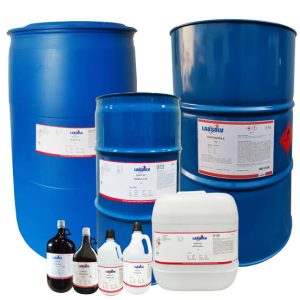
| Packaging Type | Bulk, Drum, Intermediate Bulk Container (IBC) |
| Supplier | MizanPetroGas |
| Contact | 09155118931 (Direct WhatsApp Contact) |
- Description
Description
Acetic Acid — Glacial Grade
Carboxylic Acid | Formula $CH_{3}COOH$ | Purity 99.85% | Colorless Transparent Liquid | Primary Raw Material for Petrochemical and Pharmaceutical Industries — Supplier: MizanPetroGas
Product Introduction
Acetic Acid, also known as Ethanoic Acid and in its pure grade as Glacial Acetic Acid, is one of the most fundamental, high-volume, and strategic carboxylic acids in the global chemical industry. This organic compound with the simple yet powerful chemical formula $CH_{3}COOH$ is supplied as a transparent, colorless, and volatile liquid with a pungent, sour, and penetrating odor.
Acetic acid plays a pivotal and irreplaceable role in the petrochemical industry supply chain. From the production of Vinyl Acetate Monomer (VAM) — the raw material for adhesives, paints, and industrial coatings — to Purified Terephthalic Acid (PTA) — the main precursor for PET bottles and polyester fibers — acetic acid is at the heart of downstream petrochemical processes.
The name Glacial for the pure grade of this acid ($\geq 99.85\%$ purity) is inspired by its interesting physical behavior at low temperatures: the freezing point of pure acetic acid is 16.6°C — meaning that at room temperature and cool weather, this clear liquid completely freezes and forms transparent, ice-like crystals. This unique feature makes it easy to distinguish the pure grade from more diluted grades.
MizanPetroGas | 09155118931 | sell@mizanpetrogas.com
Pricing and Purchasing Acetic Acid
The price of acetic acid is directly influenced by the fluctuations in the global prices of methanol and carbon monoxide — the primary feedstock for the production process — as well as exchange rates, international shipping costs, and supply-demand balance in Asian and European markets. Bulk and direct purchasing from MizanPetroGas, by eliminating intermediaries, ensures competitive pricing and supply stability for downstream industries. To receive daily price inquiries, technical consulting, and to place an order, please contact our sales experts.
Technical and Structural Overview
Acetic Acid ($CH_{3}COOH$) is the simplest carboxylic acid after formic acid and consists of a methyl group ($CH_{3}–$) attached to a carboxyl group ($–COOH$). The presence of the carboxyl group — which itself is a combination of a carbonyl group ($C=O$) and a hydroxyl group ($–OH$) — determines the acidic nature of this molecule. The acid dissociation constant ($pKa$) of acetic acid is 4.76, placing it in the category of weak acids; however, in the glacial grade, its extremely high concentration creates significant corrosive power.
Due to the polar structure of the carboxyl group, acetic acid is completely miscible with water, alcohols, ethers, and many organic solvents. This property of complete miscibility, along with a moderate dielectric constant ($\epsilon \approx 6.2$), makes it an ideal polar protic solvent for a wide range of industrial and laboratory chemical reactions.
From an industrial production perspective, acetic acid is mainly produced via the methanol carbonylation process (Monsanto Process / Cativa™ Process), in which methanol ($CH_{3}OH$) reacts with carbon monoxide ($CO$) in the presence of rhodium or iridium catalysts. This process, with an efficiency of over 99%, forms the backbone of global acetic acid production.
Key Features
- Extraordinarily high purity ($\geq 99.85\%$) — Glacial Grade
- Complete miscibility with water and organic solvents
- High boiling point (118°C) — process stability
- Ideal polar protic solvent
- Specific freezing point (16.6°C) — pure grade identification
- Strategic raw material for petrochemical industries
- Biodegradable and environmentally friendly
- High reactivity in esterification
- Ability to produce diverse derivatives (esters, anhydrides)
- Chemical stability during storage
- Compliance with pharmaceutical standards (Pharma Grade)
- Stable and continuous supply by MizanPetroGas
Benefits
Glacial Purity ($\geq 99.85\%$)
The pure grade of acetic acid with minimum water and impurities, suitable for the most sensitive chemical and pharmaceutical processes requiring high precision.
Unmatched Solubility
The ability to completely mix with water and most organic solvents makes acetic acid a versatile protic solvent in the paint, resin, and pharmaceutical industries.
High Thermal Stability
A boiling point of 118°C allows usage in high-temperature chemical processes without the risk of sudden evaporation or degradation.
Industrial Building Block
Acetic acid is the main precursor for producing VAM, PTA, cellulose acetate, acetic anhydride, and hundreds of other widely used chemical compounds.
Biodegradable
Acetic acid easily degrades in the environment into $CO_{2}$ and water, and compared to many other industrial acids, it has a much smaller environmental footprint.
Reliable Supply by MizanPetroGas
Guaranteed authenticity, consistency of technical specifications in every shipment, and full logistical support for domestic and export markets with diverse packaging.
Applications and Target Industries
Base Petrochemical Applications (High Volume)
Production of Vinyl Acetate Monomer (VAM)
The largest consumption market for acetic acid globally — VAM is the raw material for producing PVA adhesives, water-based paints (latex), emulsions, and industrial/construction coatings.
Production of Purified Terephthalic Acid (PTA)
Acetic acid is used as the primary solvent in the oxidation process of paraxylene to PTA. PTA is the raw material for PET bottles and polyester fibers in the textile industry.
Production of Acetic Anhydride
Acetic anhydride is produced from the dehydration of acetic acid and is the raw material for producing aspirin (acetylsalicylic acid), cellulose acetate, and many industrial esters.
Production of Acetate Esters
Ethyl acetate, butyl acetate, and isopropyl acetate — key solvents in paints, printing inks, lacquers, and industrial coatings — are produced from the reaction of acetic acid with respective alcohols.
Pharmaceutical and Medical Industries
Production of Aspirin (Acetylsalicylic Acid)
Acetic acid (via acetic anhydride) in the acetylation reaction of salicylic acid produces the world’s most consumed medicine — aspirin.
Solvent and pH Regulator
Used in the formulation of various drugs, antibiotics, vitamins, and dietary supplements as a solvent and pH regulator.
Disinfectant and Antiseptic
Dilute acetic acid solution (1–5%) has antibacterial and antifungal properties and is used in certain medical and hygiene disinfectant formulations.
Other Industries
Paint and Resin Industry
Polar protic solvent in the formulation of paints, industrial coatings, and alkyd resins. Also a raw material for producing paint solvent esters.
Production of Cellulose Acetate
Essential material in the manufacture of photographic films, cigarette filters, textile fibers (acetate rayon), and engineering plastics.
Food Industry
In food grade (E260) used as an acidity regulator, preservative, and flavoring agent (vinegar) in food products.
Textile Industry
As a pH regulator, neutralizing agent, and auxiliary chemical in textile dyeing and finishing processes.
Target Audience
VAM and PTA Producers
Petrochemical complexes producing vinyl acetate monomer and purified terephthalic acid — the world’s largest consumers of acetic acid.
Pharmaceutical Industries
Companies producing aspirin, antibiotics, vitamins, and active pharmaceutical ingredients (APIs) requiring high-purity acetic acid.
Paint and Coating Manufacturers
Factories producing industrial and construction paints, alkyd resins, lacquers, and printing inks.
Food Industries
Producers of industrial vinegar, food additives, preservatives, and flavorings requiring Food Grade.
Textile Industries
Dyeing, fabric printing, and textile finishing units requiring acetic acid as a process auxiliary.
Merchants and Suppliers
Trading companies and distributors of chemical and petrochemical raw materials in domestic and export markets.
Glacial Acetic Acid vs. Regular Acetic Acid
| Property | Glacial | Regular / Vinegar |
|---|---|---|
| Concentration | $\geq 99.85\%$ | 4–8% (Household vinegar) / 30–60% (Industrial) |
| Freezing Point | 16.6°C — formation of ice-like crystals | Below 0°C (depending on concentration) |
| Corrosiveness | Very high — strong corrosive | Mild |
| Main Application | Petrochemical, pharmaceutical, chemical industries | Food, household, cleaning |
| Packaging | HDPE drum, IBC, stainless steel tanker | Bottle, gallon, drum |
Typical Properties Table
* Values mentioned are Typical. For precise values and analysis of each shipment, please contact MizanPetroGas technical unit.
| No. | Property | Value | Unit | Test Method |
|---|---|---|---|---|
| 1 | Purity | 99.85 (Min) | wt % | ASTM D3620 / GC Analysis |
| 2 | Water Content | 0.15 (Max) | wt % | Karl Fischer / ASTM E203 |
| 3 | Formic Acid | 0.05 (Max) | wt % | ASTM D3546 |
| 4 | Acetaldehyde | 0.005 (Max) | wt % | GC / ASTM D2086 |
| 5 | Non-Volatile Residue | 0.002 (Max) | wt % | ASTM D1353 |
| 6 | Heavy Metals as Pb | < 0.5 | ppm | ASTM E84 / ICP |
| 7 | Freezing Point | 16.6 | °C | ASTM D1015 |
| 8 | Boiling Point | 118 | °C | ASTM D1078 |
| 9 | Density at 20°C | 1.049 – 1.053 | g/cm³ | ASTM D4052 |
| 10 | Refractive Index ($nD^{20}$) | 1.371 – 1.373 | — | ASTM D1218 |
| 11 | Flash Point | 39 (Closed Cup) | °C | ASTM D56 |
| 12 | Viscosity at 25°C | ~1.06 | cP (mPa·s) | Brookfield |
| 13 | Appearance | Colorless Transparent Liquid | — | Visual Inspection |
| 14 | HS Code | 29152100 | HS Code | — |
| 15 | Packaging | Bulk / Drum / IBC | — | — |
⚠️ Note: Please contact MizanPetroGas technical experts to receive the Certificate of Analysis for each shipment and ensure it meets your specific requirements. Chemical parameters may have slight variations depending on the production batch.
Performance Concept Chart
| Glacial Purity ($\geq 99.85\%$) | Very Excellent | |
| Solubility & Miscibility | Complete with water and organic solvents | |
| Thermal Stability (up to 118°C) | Very Good | |
| Reactivity in Esterification | Excellent | |
| VAM Production Efficiency | Very Excellent | |
| PTA Production Efficiency | Excellent | |
| Biodegradability | Very Good (Rapid degradation) | |
| Low Water Content | Very Excellent (Max 0.15%) | |
| Low Formic Acid Content | Very Excellent (Max 0.05%) | |
| Low Heavy Metals Content | Very Excellent (< 0.5 ppm) | |
| Storage Stability | Good (24 months under proper conditions) | |
| Pharmaceutical Grade Compliance | Excellent (USP/BP/EP) |
Packaging, Logistics, and Delivery Terms
Due to its corrosive and flammable nature (Flammable — Flash Point 39°C), Glacial Acetic Acid requires specialized packaging and transport in accordance with international IMDG and ADR standards. MizanPetroGas supplies this product in the following diverse options:
Bulk
Transport with stainless steel tankers (SS316/SS304) or internally coated acid-resistant tankers — suitable for very high-tonnage orders and petrochemical complexes.
Standard Drums
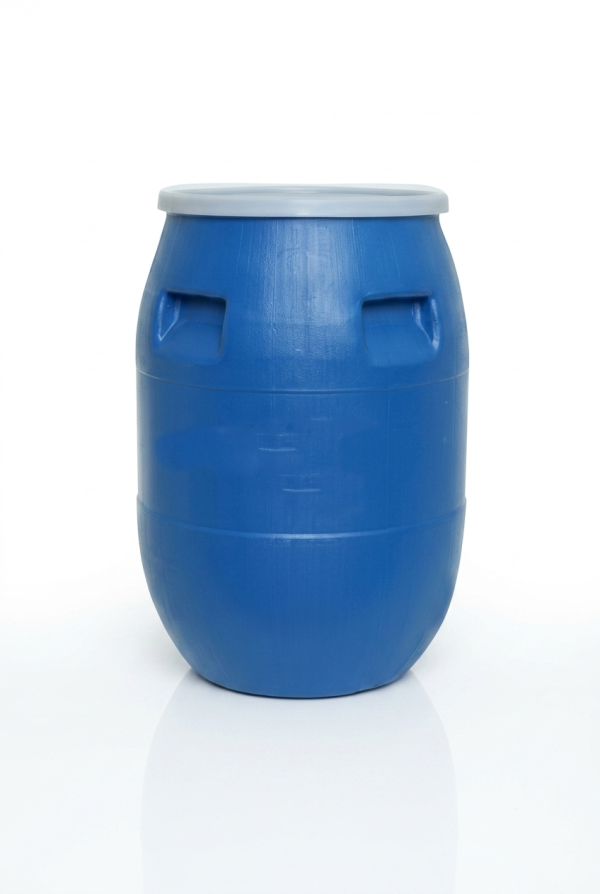
220-liter HDPE drums — industry standard for handling and storing acetic acid. Resistant to corrosion and leakage.
Intermediate Bulk Containers (IBC)
1000-liter containers with a protective metal cage — ideal for medium-volume industrial use with easy discharge via a valve.
Incoterms:
- FCA — Free Carrier at origin
- Ex-Warehouse — Ex-Works MizanPetroGas warehouse
- FOB — Free On Board at port of origin
- CFR — Cost and Freight to destination port
Storage, Handling, and Safety Conditions
- Store in a cool, dry, and well-ventilated area — away from direct sunlight, heat sources, and open flames.
- Keep away from incompatible materials — strong oxidizing agents, strong bases (caustic soda), metals (such as iron and zinc), and amines.
- Freezing point precaution: Since pure acetic acid freezes at 16.6°C, storage facilities must maintain temperatures above 20°C to prevent crystallization, or use heating systems if necessary.
- Personal Protective Equipment (PPE): Always use acid-resistant gloves, chemical goggles, full-face shields, and appropriate protective clothing when handling.
- Ventilation: Use local exhaust ventilation to control vapor concentrations below occupational exposure limits due to its pungent odor and vapors.
- In case of contact: Flush immediately with plenty of water for at least 15 minutes and seek immediate medical attention.
- Suitable materials for storage and piping: Stainless steel (SS316), glass, polyethylene (HDPE), and specialized fluoropolymers (PTFE). Avoid carbon steel, copper, and aluminum.
- Maximum storage duration: 24 months under ideal conditions and in original sealed containers.
Buy and Inquire About Acetic Acid
Buy and Inquire About Acetic Acid
To inquire about daily prices, warehouse stock, receive the Certificate of Analysis, and guarantee product authenticity from MizanPetroGas, contact our sales experts today.
+989155118931 – Direct WhatsApp Contact
Sales Department Email: sell@mizanpetrogas.com | Ex-Warehouse Delivery + Fast Shipping Nationwide and Exports