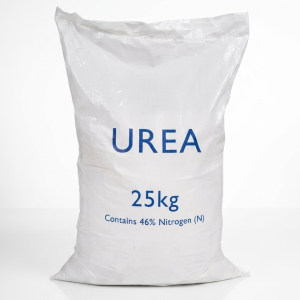
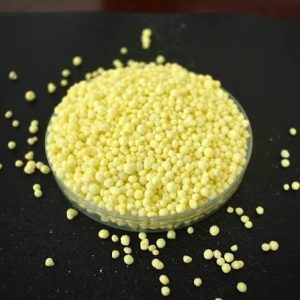
Granular Urea (Coated)
| Product Name | Coated Granular Urea |
|---|---|
| Chemical Group | Granular Urea / Nitrogenous Mineral Fertilizers |
| Granule Size Distribution | 2.0 to 4.0 mm |
| Biuret Content | 0.94 wt % (Max 1.0%) |
| Formaldehyde Content | 0.55 wt % |
| Equivalent Grades | Agricultural Granular Urea (Conditioned) |
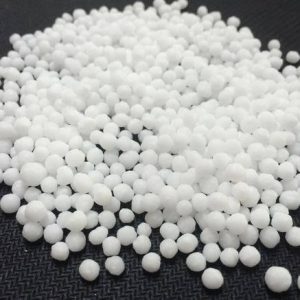
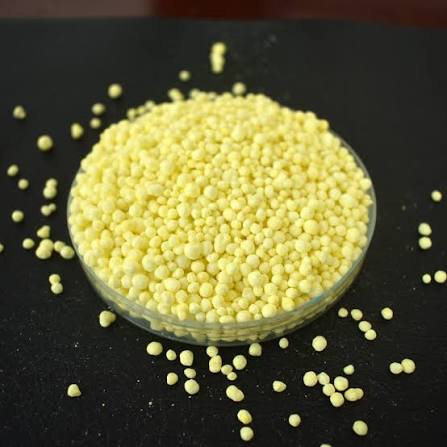
| Physical Appearance | White to Off-White Spherical Granules |
| HS Code | 31021000 — Mineral or Chemical Fertilizers, Nitrogenous (Urea) |
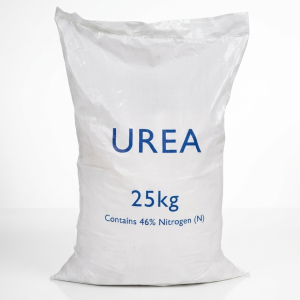
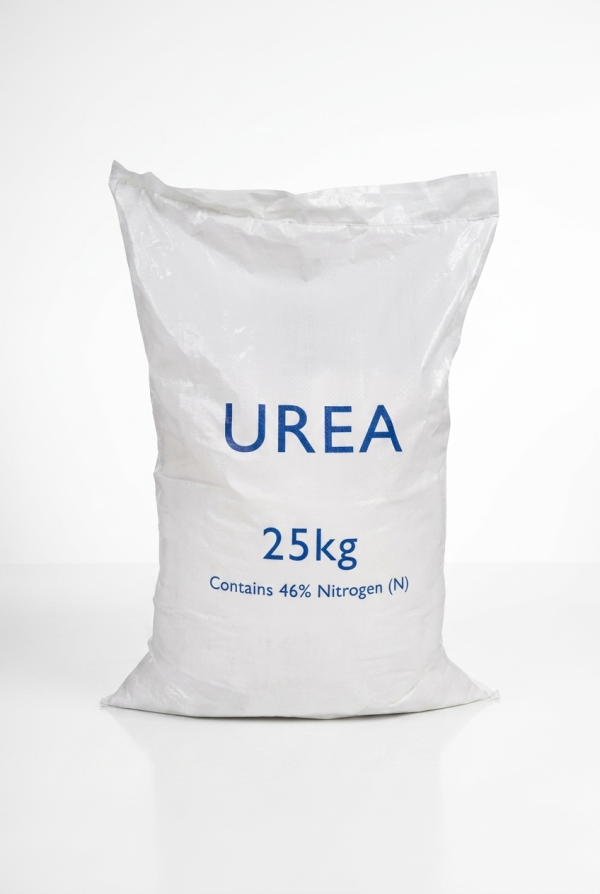
| Packaging Type | Break Bulk Vessel | 50 kg to 1000 kg FIBC Jumbo Bags |
| Supplier | MizanPetroGas |
| Contact | 09155118932 (Direct WhatsApp Contact) |
- Description
Description
Coated Granular Urea – Agricultural Nitrogen Fertilizer
Highest concentrated solid nitrogen fertilizer with 46% pure nitrogen – Controlled slow release, coarse 2–4 mm granulometry, superior free-flowing rheology, and enhanced crushing strength over prilled urea | Supplier: MizanPetroGas
Product Introduction
Coated Granular Urea, globally known as Agricultural Granular Urea or Conditioned Granular Urea, is a premium-grade solid nitrogen fertilizer widely adopted across modern agriculture and industrial processing due to its structural superiority over conventional prilled urea. Containing 46 wt % pure nitrogen, it represents the most concentrated and dense solid nitrogen source available in the international fertilizer trade.
Featuring a uniform particle size distribution of 2 to 4 mm, granular urea offers a robust physical morphology that prevents crushing, dust generation, and degradation during bulk shipping, handling, and mechanized spreading. The primary commercial advantage of this fertilizer lies in its high nutrient concentration, which accelerates vegetative plant development. It can be applied directly to soil or blended with phosphate and potash compounds to produce balanced NPK (Nitrogen, Phosphorus, Potassium) bulk fertilizers. MizanPetroGas Company supplies this essential commodity with guaranteed quality standards and flexible multimodal logistics for regional and international markets.
MizanPetroGas | 09155118932 | sell@mizanpetrogas.com
Pricing and Purchasing Coated Granular Urea
Due to global volatility in crude oil and natural gas markets (the primary feedstock for ammonia synthesis), agricultural granular urea pricing adjusts dynamically. International benchmark rates (FOB Arabian Gulf, Black Sea, Baltic), exchange rate fluctuations, and seasonal planting demand heavily impact current market levels. For real-time price quotations, technical datasheets, and custom supply arrangements, contact the commercial department at MizanPetroGas.
Why Coated Granular Urea? – Superiority Over Prilled Urea
Coated granular urea delivers a significant qualitative upgrade over traditional prilled urea. Differences in granulation technology, mechanical strength, and protective surface conditioning ensure superior agronomic efficiency and minimal nutrient loss across modern farming systems.
Ultra-High Nitrogen Content (46%)
Providing 46% pure nitrogen, this product delivers the most concentrated solid nitrogen source to stimulate vegetative growth and increase crop yield potential.
Superior Spreading & Flowability
Coarser granules (2–4 mm) provide superior free-flowing behavior over prills, ensuring uniform broadcast distribution across wide swaths while eliminating caking risks.
Controlled Slow-Release Profile
The conditioned physical matrix facilitates sustained nitrogen delivery, reducing loss from ammonia volatilization and nitrate leaching to maximize nutrient uptake efficiency.
Key Features
- Pure Nitrogen Content: 46% Min (Most concentrated solid nitrogen fertilizer)
- Coarse Particle Size: 2.0 to 4.0 mm
- Controlled Biuret Content: 0.94% (Below the 1.0% commercial limit)
- Formaldehyde Conditioner: 0.55% (Improves hardness and anti-caking)
- Excellent Free-Flowing Rheology
- High Mechanical Crushing Strength (> 3.5 kg/granule)
- Sustained Nitrogen Release Profile (Slow Release)
- Reduced Losses from Volatilization and Leaching
- Uniform Broadcast Distribution (Up to 24-meter swath width)
- Optimized Application Rate: 15 to 30 g/m²
- Seamless Bulk-Blending Compatibility with Phosphate & Potash
- Fully Compatible with Modern Mechanized Spreaders
- Suitable for All Cereal, Horticultural, and Turf Crops
- High Physical Resistance During Extended Sea Transport
- Flexible Packaging: Break Bulk & Jumbo Bags
- Available Under International Incoterms: FCA, FOB, CFR, CIF
Key Advantages
Maximum Nitrogen Efficiency
With 46% pure nitrogen, each kilogram delivers 460 grams of plant-available nitrogen, offering unmatched nutrient density among solid fertilizers.
Reduced Application Frequency
The gradual release profile delivers nutrients steadily throughout the growth cycle, reducing application frequency and lowering farm labor overhead.
High Mechanical Integrity
Granules are significantly harder than prills, minimizing attrition and particulate fines during shipping, storage, and mechanical handling.
Homogeneous Field Distribution
Coarse, uniform granulometry (2–4 mm) allows precision application by hand or tractor-mounted spreaders up to 24 meters without segregation.
Lower Environmental Impact
Unlike prills prone to rapid volatilization, the conditioned granule structure minimizes atmospheric ammonia losses and groundwater nitrate contamination.
Versatile Industrial Raw Material
Beyond agriculture, controlled chemical parameters make this grade an effective industrial precursor for melamine, UF resins, adhesives, and DeNOx systems.
Applications and Target Industries
Agriculture & Commercial Horticulture
Basal & Top-Dressing for Cereals
Primary nitrogen source for pre-plant basal application and top-dressing in wheat, barley, corn, and rice during tillering and stem elongation stages.
Turfgrass & Amenity Landscapes
Prime choice for sports pitches, golf courses, parks, and urban turf with recommended application rates of 15 to 30 g/m² for deep greening.
Orchards & Greenhouses
Provides sustained nitrogen feeding for fruit trees, vineyards, citrus groves, and greenhouse vegetables, readily blending into custom fertility programs.
Downstream Chemical Manufacturing
Melamine Synthesis
Thermal conversion feedstock for melamine production, utilized in manufacturing durable melamine-formaldehyde laminates, coatings, and tableware.
Urea-Formaldehyde (UF) Resins
Core reactant in synthesizing industrial UF adhesives for particleboard, MDF, plywood, and engineered wood composite products.
NPK Bulk-Blending
Uniform granulometry makes it the ideal dry nitrogen component for homogeneous NPK fertilizer blending without particulate separation.
Environmental & Industrial Systems
$NO_x$ Abatement (SCR / SNCR)
Utilized in Selective Catalytic Reduction systems in thermal power stations, industrial boilers, and heavy marine engines to convert $NO_x$ into harmless $N_2$ and water.
Diesel Exhaust Fluid (DEF / AdBlue)
High-purity technical grade acts as the primary raw material for blending AUS 32 solutions mandated for Euro 5 and Euro 6 diesel emissions reduction.
Animal Feed Supplement (NPN)
Serves as a Non-Protein Nitrogen (NPN) dietary supplement in ruminant livestock feeds (cattle and sheep) for rumen microbial protein synthesis.
Typical Technical Specifications – Coated Granular Urea
| No. | Property | Typical Value | Unit | Test Method / Standard |
|---|---|---|---|---|
| 1 | Total Nitrogen Content | 46.0 (Min) | wt % | ISO 5315 / AOAC 2.065 |
| 2 | Biuret Content | 0.94 (Max 1.0) | wt % | ISO 18643 / ASTM D4627 |
| 3 | Formaldehyde Content | 0.55 | wt % | ISO 22241 / ASTM D7621 |
| 4 | Moisture Content | < 0.50 | wt % | ISO 760 / ASTM D4019 (KF) |
| 5 | Granule Size Distribution | 2.0 – 4.0 | mm | Standard Sieve (ISO 8397) |
| 6 | Crushing Strength | > 3.5 | kg/granule | ASTM D7084 |
| 7 | Bulk Density | 0.70 – 0.78 | g/cm³ | ISO 3944 |
| 8 | Melting Point | 132 – 135 | °C | ISO 3146 |
| 9 | pH (10% Aqueous Solution) | 8.0 – 9.5 | — | ISO 10523 |
| 10 | Free Ammonia | < 0.02 | wt % | ISO 7106 |
| 11 | Water Insoluble Matter | < 0.01 | wt % | ISO 5316 |
| 12 | Recommended Application Rate | 15 – 30 (1 kg per 33–66 m²) | g/m² | Crop & growth stage dependent |
| 13 | Physical Appearance | White to off-white, hard, spherical granules | — | Visual |
| 14 | Customs Tariff Code (HS Code) | 31021000 | — | Harmonized System (WCO) |
| 15 | Packaging Formats | Break Bulk Vessel | 50 kg & 1000 kg Jumbo Bags | — | — |
| 16 | Supplier | MizanPetroGas Company | — | — |
⚠️ Notice: The specifications above reflect typical quality values. Precise parameter values for specific production lots are validated in the official Certificate of Analysis (COA) provided by MizanPetroGas.
Performance Rating Overview
| Nitrogen Concentration (46%) | Maximum | |
| Granule Crushing Strength | Excellent | |
| Free-Flowing Rheology | Exceptional | |
| Sustained Release Performance | Very Good | |
| Nutrient Loss Mitigation | Very Good | |
| AdBlue Feedstock Suitability | Excellent | |
| Granulometric Uniformity (2–4 mm) | Excellent | |
| Controlled Biuret (< 1.0%) | Very Good | |
| Broadcaster Machine Compatibility | Exceptional | |
| Supply Reliability & Logistics | Guaranteed |
Packaging, Logistics and Delivery Terms
To meet diverse global transport requirements, Coated Granular Urea is packaged and dispatched in standard commercial configurations:
1. Break Bulk Vessel
Direct bulk loading into ship holds or specialized hopper trucks — highly economical for large commercial export tonnages.
2. FIBC Jumbo Bags
Packed in heavy-duty woven polypropylene 500 kg to 1000 kg big bags with internal PE liners, offering superior protection against humidity.
Delivery Terms (Incoterms)
Available under FCA, Ex-Warehouse, FOB, and CFR/CIF shipping terms, ensuring maximum operational flexibility for buyers.
Storage and Handling Conditions
- Hygroscopic Sensitivity: Urea is naturally hygroscopic. Excessive moisture absorption causes granule agglomeration, caking, and poor spreading. Keep bags sealed until field application.
- Storage Temperature: Store in a cool, well-ventilated, dry warehouse away from direct sunlight. Recommended ambient range: 10–30°C.
- Segregation: Maintain clear segregation from strong oxidizing agents, nitrates, inorganic acids, and strong alkalis.
- Shelf Life: Retains full physical hardness and chemical integrity for up to 12 months in original, undamaged packaging under recommended warehouse conditions.
- Personnel Safety: Wash thoroughly with soap and water after handling. Use dust protection masks and eye protection during bulk material transfers.
Comparative Analysis: Coated Granular Urea vs. Prilled Urea
| Property | Coated Granular Urea | Prilled Urea |
|---|---|---|
| Particle Sizing | 2.0 – 4.0 mm | 0.8 – 2.0 mm |
| Mechanical Hardness | High (Crushing > 3.5 kg) | Low (Crushing ~ 1.5–2.0 kg) |
| Free-Flowing Rheology | Exceptional | Moderate |
| Caking Resistance | High (Conditioned surface) | Low (Prone to agglomeration) |
| Nitrogen Release Rate | Sustained (Slow Release) | Rapid (Prone to flash loss) |
| Volatilization Losses | Low | High |
| Mechanized Spreading | Excellent (Up to 24 m swath) | Limited broadcast width |
| Bulk-Blending Utility | ✅ Yes (Matches DAP/MOP sizing) | ❌ No (Particle segregation) |
| AdBlue / Industrial Utility | ✅ Yes (Controlled parameters) | Limited |
| Relative Value | Premium (Higher efficiency) | Baseline commodity |
Recommendation: For high-tonnage agricultural operations prioritizing spreading precision, lower atmospheric nitrogen loss, and uniform crop growth, Coated Granular Urea delivers superior economic return over prills.
Order Coated Granular Urea — Request Official Quotation
46% Nitrogen Fertilizer | Slow Release | Bulk & Jumbo Bags | Real-Time Market Pricing
sell@mizanpetrogas.com
09155118932 — Direct WhatsApp Contact
Email Quotation Request
© All technical content rights reserved for MizanPetroGas | www.mizanpetrogas.com