
PET BG821

Polyethylene Terephthalate Grade 821 (PET BG821) – Bottle Grade
Thermoplastic polyester with optimized intrinsic viscosity and superior gas barrier properties – Prime choice for carbonated soft drinks (CSD) and oxygen-sensitive packaging | Produced by Shahid Tondgooyan Petrochemical | Supplier: MizanPetroGas
Product Introduction
Polyethylene Terephthalate Grade 821 (PET BG821) is one of the premier bottle-grade resins in the product portfolio of Shahid Tondgooyan Petrochemical Company. It is engineered to satisfy the stringent quality and performance demands of the beverage packaging sector, particularly for Carbonated Soft Drinks (CSD) and barrier-critical food packaging. This grade is commercially available in two tailored sub-grades: BG-820 S and BG-820 N, both complying with global food-contact safety standards.
PET is a thermoplastic polyester with the repeating molecular structure $(C_{10}H_8O_4)_n$, produced via the condensation polymerization of Purified Terephthalic Acid (PTA) and Monoethylene Glycol (MEG). Grade BG821 is specifically optimized for high-speed Injection Stretch Blow Molding (ISBM) and standard blow-molding processes, delivering a precise balance of intrinsic viscosity (IV), crystal clarity, impact toughness, and low gas permeation ($CO_2$ and $O_2$).
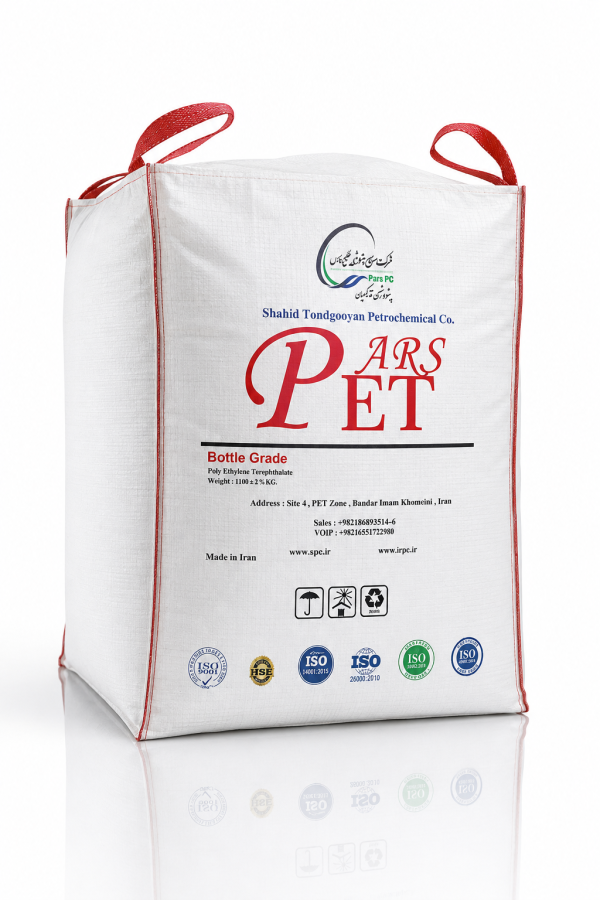
Manufactured by Shahid Tondgooyan Petrochemical Company using advanced Solid State Polymerization (SSP) technology, this resin provides consistent batch-to-batch quality. MizanPetroGas Company supplies PET BG821 directly to converters with verified manufacturer Certificates of Analysis (COA) and reliable logistics support.
MizanPetroGas | 09155118932 | sell@mizanpetrogas.com
Pricing and Purchasing PET BG821
Commercial pricing for PET Bottle Grade BG821 reflects movements in international PTA and MEG benchmark indices, foreign exchange rates, beverage industry seasonal cycles, and regional production allocations. MizanPetroGas facilitates streamlined material procurement for bottling plants and converting operations. Contact our commercial sales desk to receive current pricing and proforma invoices for both BG-820 S and BG-820 N sub-grades.
Chemical Structure and Manufacturing Process
PET resin is synthesized via the polycondensation of two key petrochemical feedstocks: Purified Terephthalic Acid (PTA) and Monoethylene Glycol (MEG). The production cycle at Shahid Tondgooyan Petrochemical consists of four primary phases:
PET BG821 Production Steps at Shahid Tondgooyan Petrochemical
- Esterification: PTA and MEG react at high temperatures (240–260°C) to yield bis(2-hydroxyethyl) terephthalate (BHET) monomer, releasing water as a condensation byproduct.
- Melt Polymerization: BHET undergoes polycondensation under high vacuum and elevated temperatures (270–290°C) to form amorphous PET with base intrinsic viscosity ($IV \approx 0.60\text{ dL/g}$).
- Solid State Polymerization (SSP): Amorphous chips are held below their melting point (200–220°C) under high vacuum or inert nitrogen ($N_2$) flow, steadily increasing the IV to the bottle-grade specification while stripping residual acetaldehyde (AA) to minimal levels.
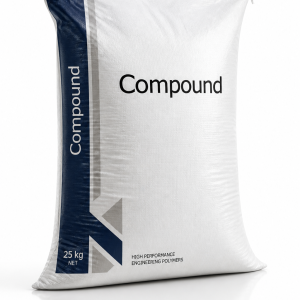
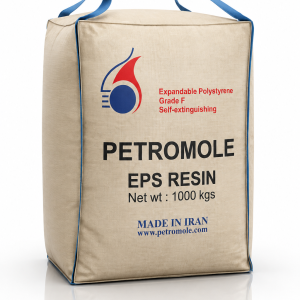
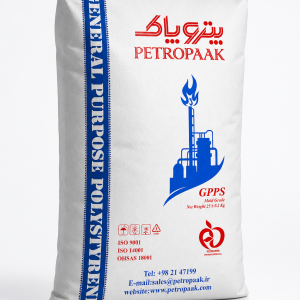
- Crystallization & Bagging: The stabilized polymer is crystallized into uniform granules and packed into 25 kg moisture-barrier bags on standard pallets.
Comparison: Sub-Grades BG-820 S vs. BG-820 N
PET BG821 is produced in two specialized sub-grades to match specific container performance criteria and filling requirements:
BG-820 S (CSD Grade)
Engineered for Carbonated Soft Drink (CSD) bottles requiring high hoop strength, burst pressure resistance, and minimal $CO_2$ loss on high-speed ISBM lines.
BG-820 N (Water Grade)
Designed for mineral water and still beverage bottles, prioritizing maximum optical clarity and ultra-low acetaldehyde (AA) to preserve pristine taste and aroma.
Technical Grade Consultation
Our polymer engineers assist in selecting the ideal sub-grade based on machine specifications, cycle speeds, and preform design. Contact: 09155118932
Key Features
- Optimized Intrinsic Viscosity (IV: 0.80–0.84 dL/g for S | 0.78–0.82 dL/g for N)
- Crystal-Clear Optical Transparency and High Surface Gloss
- High Tensile and Hoop Burst Strength
- Low Gas Permeability ($CO_2$ Retention & $O_2$ Ingress Barrier)
- Excellent Toughness and Impact Resistance
- Superb High-Speed Processability in ISBM and Blow Molding
- High Thermal Stability (up to 285°C)
- Low Specific Gravity for Lightweight Preform Designs
- Zero Odor or Flavor Impartation to Sensitive Beverages
- Food-Grade Certified (FDA & EFSA Compliant)
- Ultra-Low Acetaldehyde (AA) Content
- 100% Recyclable Thermoplastic Polymer
Key Advantages
Superior Carbonation Retention
Sub-grade BG-820 S provides dense molecular packing, significantly reducing $CO_2$ loss to extend the shelf life of carbonated soft drinks.
Ultra-Low Acetaldehyde (AA)
Sub-grade BG-820 N guarantees ultra-low AA levels, preventing off-tastes in unflavored, still mineral and spring waters.
High-Speed Molding Stability
Uniform molecular weight distribution ensures wide processing windows, consistent stretch characteristics, and low scrap rates on rotary ISBM machines.
Brilliant Product Display
Delivers glass-like clarity and high surface gloss, enhancing packaging aesthetics and shelf presence for beverage brands.
Lightweighting Potential
High mechanical strength allows container converters to reduce preform weights without compromising top-load capacity or base burst strength.
Certified Food Safety
Meets international regulatory mandates for direct food and beverage contact with non-detectable monomer or additive migration.
Applications and Target Industries
Carbonated Soft Drinks & Sparkling Beverages
Carbonated Soft Drink (CSD) Bottles
Production of 0.3L to 2.5L CSD bottles with petaloid bases designed to withstand internal pressure up to 6 bar without base inversion.
Sparkling Water & Energy Drinks
Packaging for sparkling mineral waters and carbonated functional drinks requiring high $CO_2$ barrier retention and drop toughness.
Carbonated Malt Beverages
Lightweight containers for non-alcoholic malt beverages providing barrier protection against oxygen ingress and carbonation loss.
Mineral Water & Still Beverages
Natural Mineral & Spring Water
Single-serve (0.5L) and family-pack (1.5L) still water bottles requiring pure taste preservation and water-clear transparency.
Ready-to-Drink (RTD) Teas & Juices
Bottling still juices, iced teas, and flavored waters with excellent surface gloss and clarity.
Edible Oil & Condiment Bottles
Bottling culinary oils and liquid condiments where grease resistance and clear display of contents are essential.
Typical Technical Specifications – PET BG821
| No. | Property | BG-820 S (CSD) | BG-820 N (Water) | Unit | Test Method |
|---|---|---|---|---|---|
| 1 | Intrinsic Viscosity (IV) | 0.80 – 0.84 | 0.78 – 0.82 | dL/g | ASTM D4603 |
| 2 | Acetaldehyde Content (AA) | < 1.5 | < 1.0 | ppm | ASTM D4526 (HS-GC) |
| 3 | Diethylene Glycol (DEG) | 1.0 – 1.5 | 1.0 – 1.5 | wt % | ASTM D4603 |
| 4 | Melting Point ($T_m$) | 245 – 255 | 245 – 255 | °C | ASTM D3418 (DSC) |
| 5 | Glass Transition Temp ($T_g$) | 75 – 80 | 75 – 80 | °C | ASTM D3418 (DSC) |
| 6 | Density | 1.38 – 1.40 | 1.38 – 1.40 | g/cm³ | ASTM D1505 / D792 |
| 7 | Moisture Content | < 0.4 | < 0.4 | wt % | ASTM D4019 (KF) |
| 8 | Carboxyl End Groups (–COOH) | < 30 | < 30 | mmol/kg | ASTM D7409 |
| 9 | Crystallinity | 50 – 55 | 50 – 55 | % | ASTM D3418 (DSC) |
| 10 | Bottle Clarity (Haze) | < 3.5 | < 3.0 | % Haze | ASTM D1003 |
| 11 | Color Value ($b^*$) | < 1.5 | < 1.0 | — | CIE Lab (HunterLab) |
| 12 | Physical Appearance | Clear Granules | Clear Granules | — | Visual |
| 13 | Packaging | 25 kg bags – 40 bags per pallet (1,000 kg) | — | — | |
| 14 | Manufacturer | Shahid Tondgooyan Petrochemical Company | — | — | |
⚠️ Notice: Figures listed represent typical technical properties. Specific lot parameters are confirmed in the official Certificate of Analysis (COA) provided by MizanPetroGas.
Handling, Drying & Processing Guidelines
- Hygroscopic Sensitivity: PET absorbs ambient moisture. Moisture above 40 ppm causes hydrolytic chain degradation during extrusion, leading to IV drop, loss of mechanical strength, and haze defects.
- Pre-Drying Parameters: Dehumidify resin at 160–170°C for 4 to 6 hours with a desiccant dryer operating at a dew point $\leq -40\text{°C}$ to reduce moisture below 30 ppm.
- Melt Temperature: Set injection barrel temperatures between 270–290°C; do not exceed 295°C to avoid thermal degradation and acetaldehyde spikes.
- Preform Mold Chilling: Maintain mold chilled water at 6–12°C for rapid quenching, ensuring completely amorphous preforms.
- Stretch Blow Reheating: Reheat preforms to 95–110°C for optimal biaxial orientation and maximum burst resistance.
- Storage Conditions: Store in a cool, dry warehouse (10–30°C) protected from direct sunlight. Bags should remain sealed until machine loading.
Order PET BG821 — Request Official Quotation
Bottle Grade PET (BG-820 S / BG-820 N) | Shahid Tondgooyan Petrochemical
sell@mizanpetrogas.com
09155118932 — Direct WhatsApp Contact
Email Quotation Request
© All technical content rights reserved for MizanPetroGas | www.mizanpetrogas.com
- Description
Description
| Product Name | Polyethylene Terephthalate — PET BG825 |
|---|---|
| Chemical Family / Formula | Thermoplastic Polyester — (C₁₀H₈O₄)n |
| Grade | 825 (Bottle Grade) |
| Physical Appearance | Transparent crystalline chips / granules — High purity |
| Origin Complex Producer | Shahid Tondgooyan Petrochemical Company |
| Packaging Type | Standard 25 kg multi-layer moisture-barrier bags (Palletized) |
| Supplier | MizanPetroGas |
| Contact | 09155118932 (Direct WhatsApp Contact) |