TEG

Triethylene Glycol (TEG) Technical Specifications
Sourced from Shazand Petrochemical (Arak) | MizanPetroGas | 2026
| Property | Value | Unit | Method |
|---|---|---|---|
| Product Name | Triethylene Glycol (TEG) | — | — |
| Equivalent Names | Triglycol | 2,2′-(Ethylenedioxy)diethanol | TEG | — | — |
| Chemical Formula | $C_{6}H_{14}O_{4}$ | — | — |
| Molecular Structure | $\text{HO–CH}_{2}\text{–CH}_{2}\text{–O–CH}_{2}\text{–CH}_{2}\text{–O–CH}_{2}\text{–CH}_{2}\text{–OH}$ | — | — |
| Chemical Group | Glycols — Linear Polyether Diols | — | — |
| Appearance | Clear, colorless, viscous liquid with a very faint odor | — | Visual |
| Molecular Weight | 150.17 | g/mol | — |
| Density @ 20°C | 1.124–1.126 | g/cm³ | ASTM D4052 |
| Density @ 25°C | 1.120–1.122 | g/cm³ | ASTM D4052 |
| Boiling Point @ 760 mmHg | 285–288 | °C | ASTM D1078 |
| Freezing Point | -7 to -4 | °C | ASTM D1015 |
| Flash Point (CC) | 165–177 | °C | ASTM D93 |
| Auto-ignition Temperature | 370–375 | °C | ASTM E659 |
| Dynamic Viscosity @ 20°C | ~ 49 | cP | ASTM D445 |
| Dynamic Viscosity @ 40°C | ~ 18 | cP | ASTM D445 |
| Refractive Index ($n_{D}^{20}$) | 1.455–1.457 | — | ASTM D1218 |
| Vapor Pressure @ 20°C | < 0.01 | kPa | ASTM D5191 |
| Solubility in Water | Complete miscibility in all proportions | — | Visual |
| Organic Solubility | Miscible with alcohols, acetone, chloroform — Insoluble in aliphatic hydrocarbons | — | — |
| pH (10% Aqueous Solution @ 25°C) | 5.5–7.5 | — | ASTM E70 |
| Purity | $\geq 99.5$ | wt % | GC |
| Water Content (Max) | $\leq 0.1$ | wt % | Karl Fischer (KF) |
| DEG + MEG Content (Max) | $\leq 0.3$ | wt % | GC |
| Acid Number | $\leq 0.05$ | mg KOH/g | ASTM D1613 |
| HS Code | 29094990 — Ether-alcohols and their halogenated, sulphonated, nitrated or nitrosated derivatives | ||
| Origin Complex Producer | Shazand Petrochemical (Arak) | ||
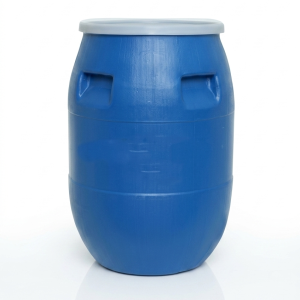
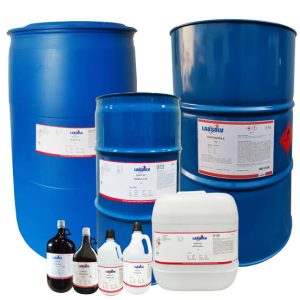
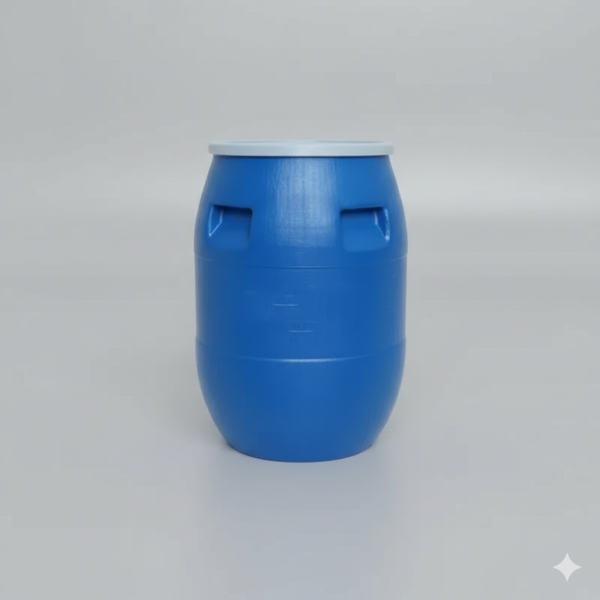
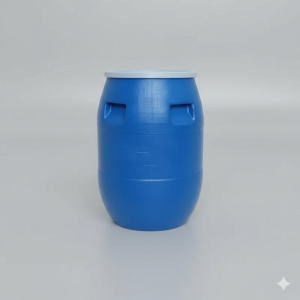
| Packaging | Bulk | New 220-liter drum (Net Weight: 220 kg) — 4 strapped drums per wooden pallet | ||
| Storage Conditions | Dry, cool, well-ventilated area — Tightly closed containers — Away from strong oxidizers and direct sunlight | ||
Safety, Transportation, and Packaging Data
| Parameter | Specifications | Description |
|---|---|---|
| Hazard Class (GHS) | Non-Classified — No hazard pictograms | Non-flammable — Very low toxicity |
| UN Code | Not Regulated | Non-hazardous material in international transport |
| Approved Storage Vessels | Stainless steel (SS304/SS316), aluminum, fiberglass | Avoid plain carbon steel and galvanized tanks |
| Drum Type | New steel drum or lined HDPE | Net weight: 220 kg — 4 drums per wooden pallet |
| Bulk Transport | Stainless steel tanker — ISO Tank | Specialized for large industrial consumption |
| Incoterms | FCA / Ex-Warehouse / FOB / CFR | Tailored to customer requirements |
MizanPetroGas | 09155118932 | sell@mizanpetrogas.com | Sourced from Shazand Petrochemical — Purity $\geq 99.5\%$
- Description
Description
Triethylene Glycol (TEG)
$C_{6}H_{14}O_{4}$ | Industrial Solvent and Desiccant | Purity $\geq 99.5\%$ | Sourced from Shazand Petrochemical (Arak) | MizanPetroGas
Product Introduction
Triethylene Glycol, referred to in the industry as TEG, is the third member of the polyether glycol family with the chemical formula $C_{6}H_{14}O_{4}$. Obtained from the ethylene oxide (EO) hydrolysis reaction as a by-product of the monoethylene glycol (MEG) manufacturing process, it remains stable at ambient temperature as a clear, colorless, viscous, and very faint-smelling liquid.
Featuring three ethylene oxide units in its molecular chain and two terminal hydroxyl (–OH) groups, TEG exhibits distinct properties compared to MEG and DEG: higher viscosity (~ 49 cP), higher boiling point (285–288°C), significantly lower volatility, and exceptional moisture-absorption capacity. These characteristics make TEG an unrivaled choice for natural gas dehydration, vinyl polymer plasticizing, textile solvency, and cosmetic-hygiene formulations.
From a safety standpoint, TEG is a non-flammable material with a high flash point above 165°C, very low toxicity (virtually non-hazardous), and no hazard classification under the GHS system — a major advantage for industries prioritizing personnel and environmental safety.
MizanPetroGas Company supplies Triethylene Glycol with a guaranteed minimum purity of 99.5 wt %, sourced directly from Shazand Petrochemical (Arak), offered in bulk and new 220-liter drums (net weight 220 kg, 4 strapped drums per wooden pallet) to industrial consumers.
MizanPetroGas | 09155118932 | sell@mizanpetrogas.com — TEG Supply from Shazand Petrochemical — Guaranteed Purity $\geq 99.5\%$
Pricing and Purchasing Triethylene Glycol (TEG)
The price of TEG in Iranian and global markets is influenced by upstream ethylene oxide (EO) prices, MEG supply and demand dynamics (due to co-production in crackers), exchange rates and ocean freight costs, as well as peak natural gas consumption seasons (increased TEG demand for dehydration). By sourcing directly from Shazand Petrochemical and eliminating intermediaries, MizanPetroGas provides transparent and competitive pricing for bulk buyers. Contact our commercial department to inquire about real-time prices, obtain Certificate of Analysis (COA), and coordinate logistics.
Production Process and Position in the Glycol Chain
TEG is produced as a by-product of the MEG manufacturing process via the hydrolysis of ethylene oxide (EO). In this process, ethylene oxide combines with water and pre-formed glycol products through a series chain reaction:
MEG + EO → DEG | DEG + EO → TEG | TEG + EO → TetraEG (Heavier Products)
Upon exiting the reactor, the glycol mixture (MEG + DEG + TEG + heaviers) is separated via multi-stage vacuum distillation. TEG is isolated as a middle-cut fraction with a boiling point of 285–288°C and, after final refining to purity $\geq 99.5\%$, is prepared for market distribution.
1
Chain Reaction
EO + MEG → DEG
EO + DEG → TEG
In reactor under controlled pressure and temperature
2
Vacuum Distillation
Separation of TEG from MEG, DEG, and tetraglycol in multi-tray vacuum distillation towers
3
Final Refining
Removal of trace water, organic acids, and color — achieving clear TEG with purity $\geq 99.5\%$
Outstanding Physicochemical Properties
Key Physical Properties
- High Viscosity (~ 49 cP @ 20°C): TEG’s inherent viscosity provides excellent lubricity and film-forming capability — ideal for polymer plasticizing and fiber lubrication.
- High Boiling Point (285–288°C): Enables high-temperature process applications without risk of evaporation or thermal degradation — broad operating window compared to volatile organic solvents.
- Extremely Low Volatility (< 0.01 kPa @ 20°C): Prevents product loss under ambient conditions — reducing operational costs and VOC emissions.
- High Flash Point (165–177°C): Virtually non-flammable under normal conditions — inherent safety in transportation, storage, and handling.
Chemical & Functional Properties
- Powerful Hygroscopic Agent: Strong affinity for absorbing water molecules — the gold standard in natural gas dehydration and HVAC systems.
- Complete Miscibility with Water: Forms homogeneous solutions in all proportions — ideal solvent for water-based formulations.
- Polymer Compatibility: Penetrates polymer matrices without phase separation — an efficient plasticizer for PVC and vinyl polymers.
- High Chemical Stability: Resistant to oxidation, hydrolysis, and thermal degradation within operational temperature ranges.
- Very Low Toxicity ($\text{LD}_{50}\text{ Oral} > 15,000\text{ mg/kg}$): Virtually non-hazardous — suitable for cosmetics and personal care products with direct skin contact.
Applications and Target Industries
⛽ Natural Gas Dehydration
Standard solvent in contactor towers to absorb moisture from natural gas — preventing gas hydrate formation in pipelines — reducing corrosion.
♻️ Polymer Plasticizer
Efficient plasticizer in the production of vinyl polymers, soft PVC, flexible films, and flooring — enhancing flexibility, lowering glass transition temperature ($T_{g}$).
🌬️ Desiccant & HVAC
Desiccant agent in industrial air conditioning, rotary dehumidifiers, and air dryers — controlling dew point.
🧵 Textiles & Fibers
Lubricant in synthetic and natural fiber processing — reducing yarn friction — dye solvent and leveling agent.
🧴 Cosmetics & Personal Care
Solvent and humectant in formulations of hair conditioners, shampoos, skin creams, and personal care items.
🛢️ Industrial Fluids
Base for DOT brake fluids, fire-resistant hydraulic fluids, compressor oils, and specialized industrial lubricants.
🏭 Corrosion Inhibitor
Corrosion inhibitor in closed-loop water recirculation systems, boilers, and cooling systems — protecting metal surfaces.
🧪 Chemical Synthesis
Raw material in producing TEG esters (specialized plasticizers), polyester resins, and polyurethanes — pharmaceutical synthesis intermediate.
Packaging and Logistics
🚛 Bulk
Stainless steel road tankers (SS304/SS316) specialized for high-volume industries — site delivery — minimum order quantity: 5 tons.
🛢️ 220-Liter Drum
New steel or lined HDPE drums — net weight: 220 kg — 4 strapped drums per standard wooden pallet.
📦 1000-Liter IBC
HDPE tanks with protective steel frame — net weight ~ 1,125 kg — intermediate choice for medium industrial consumption.
🚢 ISO Tank
Standard 20ft ISO tank container — capacity 20–24 tons — most economical choice for export and ocean transport.
Incoterms: FCA | Ex-Warehouse | FOB | CFR — tailored to buyer destination and requirements.
Safety and Storage
- ✅ High Inherent Safety: TEG is non-flammable, non-corrosive, and has very low toxicity ($\text{LD}_{50}\text{ Oral} > 15,000\text{ mg/kg}$ in rats). Under GHS classification, it features no hazard pictograms and is considered virtually non-hazardous — a significant benefit for industrial environments.
- Skin & Eye Contact: Prolonged contact may cause mild skin dryness or irritation — washing with soap and water is sufficient. In case of eye contact: flush with abundant water for 15 minutes.
- Ingestion: Accidental ingestion typically poses no serious risk — drinking plenty of water is recommended. Consult a physician if gastrointestinal symptoms occur.
- Approved Storage Vessels: Stainless steel (SS304/SS316), aluminum, HDPE, fiberglass — avoid plain carbon steel and galvanized containers (risk of iron-glycolate complex formation).
- Storage Conditions: Store in a dry, cool (10–40°C), well-ventilated environment — away from strong oxidizers and concentrated acids — keep containers tightly closed to prevent atmospheric moisture absorption.
- Spills & Leaks: TEG easily washes away with water. Avoid releasing large volumes into surface water and groundwater due to high BOD. Collect using inert absorbents (vermiculite, sand, sawdust).
- Firefighting: Although non-flammable, in case of adjacent fire: water fog, $CO_{2}$, dry chemical powder, alcohol-resistant foam — hot molten TEG contacting water may cause spattering — use caution.
Buy Triethylene Glycol (TEG) — Shazand Petrochemical
Inquire Daily Price | Receive COA & Analysis | Packaging Consultation | Supply via Bulk / 220L Drum / IBC / ISO Tank | Ex-Warehouse Delivery + Nationwide Shipping
09155118932 — Direct WhatsApp Contact
sell@mizanpetrogas.com | Complete Purchasing Guidance | Fast and Reliable Delivery
Triethylene Glycol (TEG) — C₆H₁₄O₄ — Purity ≥ 99.5% — Shazand (Arak) — MizanPetroGas © 2026