


Chemical Fertilizers and Minerals; The Main Pillar of Food Security
Chemical fertilizers and minerals are among the most important commodity groups in the agricultural economy and basic industries. This category not only directly affects the growth, yield, and quality of agricultural products, but also plays a fundamental role in chemical industries, refineries, and acid production.
Three Main Pillars of the Supply Chain
Among the products in this group, urea, ammonia, and granular sulfur are the three main pillars of the supply chain. Ammonia serves as the basis for producing many nitrogenous fertilizers, urea is known as the most widely used nitrogenous fertilizer in the world, and granular sulfur is also important in acid production, phosphate fertilizer manufacturing, and improving plant nutrition structure.
Commercial Perspective
From a commercial standpoint, these three products are not merely consumer goods, but rather components of a chain dependent on energy, gas feedstock, production capacity, transportation, warehousing, and consumption seasons. For this reason, their price and supply are quickly affected by the global energy market, export policies, transportation costs, and seasonal demand fluctuations.
In the professional market, the buyer of these products must simultaneously pay attention to chemical composition, purity, physical form, origin of production, delivery conditions, and suitability for the final application.
Role in Agriculture and Industry
In the agricultural sector, urea serves as the main source of nitrogen, enhancing the vegetative growth of plants and acting as one of the most fundamental consumable materials in most fertilization programs. Ammonia is also the primary intermediate substance in the production of urea and other nitrogenous compounds, with its value lying in its technical and strategic role in the production chain.
Although granular sulfur is not directly a nitrogenous fertilizer, it plays a complementary and highly significant role in the production of sulfuric acid, phosphate fertilizers, and certain chemical processes. The combination of these three products is considered an infrastructure for the sustainable supply of plant nutrition and the development of downstream industries.
Comparison Table of Main Products
| Product | Main Role | Key Applications | Commercial Feature |
|---|---|---|---|
| Urea | Main source of nitrogen | Agricultural fertilizer, production of compound fertilizers | High-consumption, sensitive to gas and energy prices |
| Ammonia | Base material for fertilizer production | Production of urea, nitrates, and nitrogenous compounds | Strategic and intermediate product |
| Granular Sulfur | Complementary material in the acid production chain | Sulfuric acid, phosphate fertilizers, soil improvement | Dependent on oil and gas industries |
Key Data About This Group
| Indicator | Description |
|---|---|
| Main focus of the group | Supplying the large-scale agricultural and acid production chain |
| Most important nutritional element | Nitrogen |
| Most widely consumed global product | Urea |
| Base material for producing nitrogenous fertilizers | Ammonia |
| Role of sulfur | Agricultural supplement and effective material in acid production |
| Factors affecting price | Energy, gas feedstock, transportation, consumption season, export policy |
| Market sensitivity | High; especially in seasonal and export markets |
It should be said that urea, ammonia, and granular sulfur are three complementary links of a single chain. Urea meets the direct needs of the farm, ammonia provides the technical basis for production, and granular sulfur plays a complementary role in acid production and the manufacturing of advanced fertilizers.
For this reason, this category is considered one of the most important sectors of the raw materials market for those active in agriculture, chemical industries, and international trade.
What Is Urea and Why Is It So Important?
Urea | The World's Most Widely Used Nitrogen Fertilizer
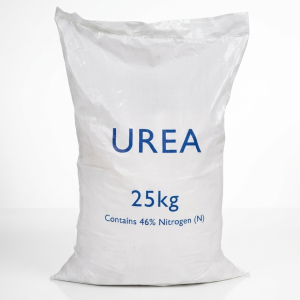
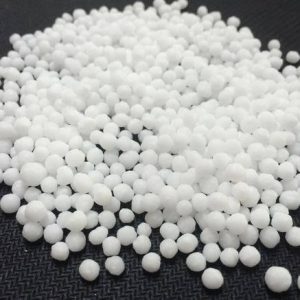
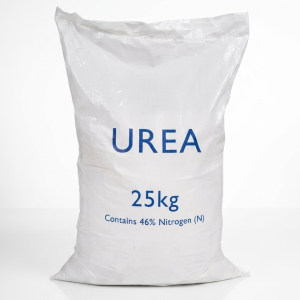
Urea, with the chemical formula CO(NH₂)₂, is a white, crystalline, highly water-soluble compound that has the highest nitrogen content among common solid fertilizers; its nitrogen content is typically around 46%. This characteristic has made urea one of the most efficient sources of nitrogen for agriculture from both economic and logistical perspectives, because it carries more nitrogen per unit of weight than many other fertilizers.
How Is Urea Produced?
Urea is produced from the reaction of liquid ammonia and carbon dioxide, and its industrial process is commonly known as the Bosch-Meiser process. In this process, ammonia and CO₂ first convert to ammonium carbamate, and then molten urea is produced through dehydration; after that, the product can be solidified into prill or granule form.
This means urea is not just a final fertilizer, but is directly dependent on the ammonia market, energy, gas feedstock, and the capacity of production units.
Common Forms of Urea
Urea is typically offered in the market in several forms, each with different applications and behavior:
| Product Form | Main Feature | Common Application |
|---|---|---|
| Prilled Urea | More spherical and finer particles | General spreading, certain consumer markets |
| Granular Urea | Coarser and more resistant granules | Agricultural use, bulk transport, mechanized spreading |
| Urea Solution | Liquid state | Liquid fertilizer, blending with other materials |
Granules generally offer advantages for transportation, warehousing, and mechanized spreading, while prills are used in certain markets due to consumption patterns or commercial preference.
The Most Important Applications of Urea
The majority of the world's urea is consumed in agriculture, and this product plays the main role in supplying nitrogen to plants. The most important applications include:
- Supplying nitrogen for the vegetative growth of plants
- Use in base fertilizers and compound fertilizers
- Application in foliar spraying and certain plant nutrition systems
- Limited use in animal feed and protein supplements
- Application in the production of resins, adhesives, and certain chemical products
Due to its high solubility and high nitrogen content, urea is considered a primary source of nutrition for many agricultural crops such as cereals, vegetables, orchards, and industrial crops.
Why Is Urea Key to Agriculture?
Urea helps plants achieve better vegetative growth and photosynthesis, which in practice leads to increased crop yield. Since nitrogen is one of the primary elements for plant growth, its deficiency typically leads to weak growth, yellowing of leaves, and reduced yield; for this reason, urea is considered a fundamental component in many fertilization programs.
Factors Affecting Urea Prices
The price of urea does not depend solely on supply and demand in a limited market, but is influenced by a complete technical and commercial chain. The most important factors include:
- Natural gas and energy prices
- Ammonia and urea production capacity
- Sea and land transportation costs and insurance
- Seasonal inventory and planting time
- Export policies and regional restrictions
- Differences between FOB and CFR/CIF markets
- Product quality, granulation, and biuret percentage
In global markets, urea has always been one of the most volatility-sensitive commodities, and the slightest disruption in production or transportation can shift prices across different hubs.
Key Data and Practical Summary
| Indicator | Description |
|---|---|
| Chemical formula | CO(NH₂)₂ |
| Nitrogen content | Approximately 46% |
| Main raw material | Ammonia and carbon dioxide |
| Common forms | Prill, granule, solution |
| Main use | Agricultural fertilizer |
| Share of global consumption | Over 90% for fertilizer and related applications |
| Main advantage | High nitrogen content and favorable transport cost per nitrogen unit |
Urea at a glance: Urea can be considered the world's most important nitrogen fertilizer; a product that holds a strategic position both in agriculture and in international trade. This substance directly affects plant growth, farm yield, and food security, and industrially it is also recognized as a product dependent on ammonia, energy, and the chemical production chain.
For a professional buyer, precise knowledge of urea type, granulation quality, nitrogen content, biuret, production origin, delivery terms, and transportation costs is fundamentally important; because in the urea market, small technical differences can create major commercial impacts.
Ammonia: The Most Important Input in Chemical Fertilizer Production
Ammonia | The Strategic Base Material in the Global Chemical and Agricultural Industry
Ammonia is one of the most strategic base materials in the global chemical and agricultural industry, and to be precise, this substance is not just a "product"; rather, it is the connection point of energy, fertilizer, chemical chains, and international trade. The importance of ammonia begins with the fact that a very large portion of its global production ultimately reaches nitrogenous fertilizers and directly affects food security, agricultural performance, and food prices. In Iran, ammonia also holds a special position; both as a feedstock and intermediate material in the urea production chain and as an industrial and export commodity with significant capacity.
What Is Ammonia?
Ammonia, with the chemical formula NH₃, is a colorless gas with a sharp, pungent odor that dissolves easily in water under normal conditions and is also stored and transported in liquid form under pressure or at low temperatures. This substance is extremely important chemically because it makes usable nitrogen industrially available to the production chain, and for this reason, it is considered one of the most fundamental compounds in the modern economy.
How Is Ammonia Produced?
Industrial ammonia production is mainly based on the Haber–Bosch process; in this method, nitrogen from the air reacts with hydrogen derived from natural gas or other hydrogen feedstocks at high pressure and temperature to produce ammonia. In practice, this means ammonia is a product entirely dependent on energy, gas feedstock, process technology, and production scale.
Accordingly, any change in natural gas prices, unit efficiency, feedstock access, or plant operational status can noticeably shift the final cost of ammonia.
Why Is Ammonia Even More Important Than Urea?
If we consider urea as the final product of the nitrogen chain, ammonia is the main foundation of that very chain. Urea, nitrates, ammonium sulfate, ammonium phosphates, and many other nitrogenous compounds are directly or indirectly dependent on ammonia.
For this reason, ammonia is not merely a sellable product, but rather the mother substance of the chemical fertilizer industry. Any disruption in ammonia supply can have a domino effect on urea and other nitrogen derivatives, which makes it one of the most commercially sensitive commodities in the chain.
The Most Important Applications of Ammonia
A large portion of the world's ammonia is consumed in fertilizer production, and according to industrial reports, about 90 percent of its consumption is related to chemical fertilizers and associated applications. However, ammonia's applications are not limited to agriculture. This substance is used in a wide range of industries:
- Production of urea and other nitrogenous fertilizers
- Production of ammonium nitrate and similar chemical compounds
- Manufacturing of nitric acid and its derivatives
- Cooling and industrial refrigeration industries
- Basic chemical industries
- Production of certain industrial and mining explosives
- Certain pharmaceutical, metallurgical, and material processing applications
This breadth of application has turned ammonia into a multipurpose substance; that is, wherever the issue of nitrogen, chemical synthesis, or industrial refrigeration arises, ammonia is present in some form.
The Role of Ammonia in Agriculture
The main role of ammonia in agriculture is supplying nitrogen. Nitrogen is one of the three primary elements of plant nutrition and contributes to vegetative growth, chlorophyll production, and increased yield. Ammonia is present in the plant nutrition chain both directly in certain application methods and indirectly through conversion into other fertilizers.
From a technical perspective, ammonia is a substance without which many nitrogenous fertilizers simply cannot be produced. Therefore, if urea is a product for final consumption, ammonia is the backbone of its production.
Technical Characteristics and Transportation
Due to its chemical and physical nature, ammonia requires specialized equipment for storage and transport. This product is usually transported as anhydrous ammonia or in high-pressure tanks and refrigerated systems, which increases cost and logistical complexity.
Consequently, distance from the port, access to standard tanks, type of vessel or tanker, and safety requirements all significantly affect the final price. Ammonia is among the materials in whose delivery chain transportation costs can constitute a significant portion of the final price.
Main Factors Affecting Ammonia Prices
The price of ammonia depends on several key variables, which makes its market more complex than many other chemical commodities. The most important factors include:
- Natural gas and hydrogen feedstock prices
- Energy and electricity costs of the production unit
- Operational capacity and plant efficiency
- Transportation, storage, and safety costs
- Geographic location of the producer relative to the consumer market
- Demand levels from the fertilizer sector and downstream industries
- Global market conditions and hub price differences
In global markets, ammonia is typically among the commodities that react quickly when gas prices rise or a producing region faces restrictions. For this reason, analyzing it without considering the energy market would be incomplete.
Iran's Position in the Ammonia Market
Iran is one of the important ammonia producers in the region and has significant capacity in this field. According to published reports, about 7 companies are active in the country's urea and ammonia industry, and names such as Pardis Petrochemical, Shiraz Petrochemical, Khorasan Petrochemical, Kermanshah Petrochemical, Razi Petrochemical, Lordegan Petrochemical, and Masjed Soleyman Petrochemical appear in this chain.
Furthermore, 2025 reports indicate that Iran's nominal ammonia production capacity is estimated at about 5.5 million tons per year, placing Iran among the world's important ammonia producers. In some sources, Pardis Petrochemical has also been introduced as one of the largest ammonia and urea producers in the region.
Summary and Practical Data
| Indicator | Description |
|---|---|
| Chemical formula | NH₃ |
| Physical state | Colorless gas with a pungent odor |
| Main production method | Haber–Bosch process |
| Main feedstock | Natural gas and atmospheric nitrogen |
| Dominant application | Nitrogenous fertilizers |
| Approximate share of fertilizer consumption | About 90 percent |
| Commercial role | Base material in the urea chain and other derivatives |
| Iran's nominal capacity (2025) | About 5.5 million tons per year |
Ammonia should be considered the most important base material in the chemical fertilizer chain; a substance that has both technical and commercial value, is vital in agriculture, and holds a central position in the chemical and refrigeration industries. Ammonia's importance exceeds that of urea in the sense that without it, a large portion of nitrogenous fertilizer production is essentially impossible.
For a professional buyer, examining purity, supply form, packaging or delivery type, production origin, transportation costs, supply stability, and its relationship with the gas market is essential; because in this market, price is not solely a function of the product, but a direct result of energy, logistics, and operational capacity.
Sulfur
Granular Sulfur | A Strategic Mineral in Industry and Agriculture
Granular sulfur is one of the most important minerals in the agricultural and chemical industry chain, and to look at it more precisely, this product is not just a simple "sulfur"; rather, it is considered a strategic material for acid production, phosphate fertilizer manufacturing, soil amendment, and supplying feedstock for downstream industries. In the professional market, granular sulfur holds a very important position due to its suitable physical form, high purity, ease of transportation, and extensive industrial use, and for this reason, it is regarded as one of the high-demand commodities in both domestic and export trade.
What Is Granular Sulfur?
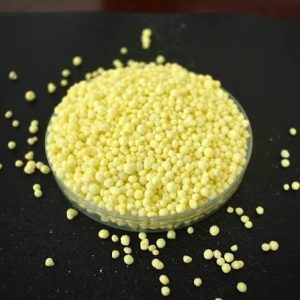
Granular sulfur is the granulated and processed form of elemental sulfur, usually offered with high purity and optimized for transport, storage, and industrial or agricultural use. Compared to powdered or lump sulfur, this product generates less dust, is easier to manage, and in many applications provides better efficiency in warehousing and loading. Granular sulfur is typically produced as uniform granules so that it behaves more predictably in both industrial processes and agricultural consumption.
↓
Sulfur (byproduct)
↓
Granular Sulfur
↓
Chemical Chain → Sulfuric Acid → Phosphate Fertilizers
Agricultural Chain → Soil Amendment and Plant Sulfur Supply
Why Is Granular Sulfur Important?
The importance of granular sulfur begins with the fact that this material sits within two major chains: the agricultural chain and the chemical-refining chain. In agriculture, sulfur is one of the secondary and essential plant nutrients, and in certain soils with sulfur deficiency, it plays an important role in improving crop quality and yield. In industry as well, sulfur is the primary feedstock for sulfuric acid production; an acid that is itself one of the most fundamental chemicals in the world and a prerequisite for producing many phosphate fertilizers such as DAP and MAP. For this reason, granular sulfur is not just an agricultural input, but a key link in the acid production and advanced fertilizer manufacturing chain.
Where Is Granular Sulfur Produced From?
The main source of sulfur production is oil refining, natural gas processing, and sour gas treatment. The more active the oil, gas, and refining industry, the greater the sulfur supply. In Iran as well, a significant portion of sulfur is supplied from refineries and gas complexes, and several major refining and petrochemical facilities play a role in its production. In general, sulfur is a very important byproduct of the upstream energy industry, and this characteristic makes its supply dependent on oil and gas production conditions, refinery projects, and gas processing capacity.
Main Applications of Granular Sulfur
Granular sulfur has diverse applications and is used in several main areas:
- Sulfuric acid production (primary feedstock)
- Production of phosphate and sulfur-based fertilizers
- Amendment of alkaline and sulfur-deficient soils
- Chemical industries and conversion processes
- Certain industrial applications such as rubber manufacturing and material processing
- Use in the production chain of other chemical and mineral substances
In agriculture, sulfur helps improve plant nutrition, regulate soil pH, and increase the availability of certain elements. In industry as well, its role goes far beyond that of a simple raw material; because without sulfur, a large chain of acid and chemical fertilizer production would be disrupted.
Important Technical Features of Granular Sulfur
For a professional buyer, granular sulfur is not evaluated solely by product name; rather, its technical specifications matter greatly. The most important features include:
- Purity: The higher the purity, the greater the industrial and agricultural value.
- Granule size: Uniformity of granules is very important in transport and consumption.
- Moisture: High moisture can reduce storage quality.
- Physical form: Uniform granules are more suitable for storage and transport.
- Dust: The less dust, the higher the safety and ease of handling.
- Storage behavior: Resistance to caking and quality degradation matters.
These technical specifications determine how suitable granular sulfur is for agricultural, industrial, or export use.
Factors Affecting Granular Sulfur Prices
The price of this product depends on several main factors:
- Production volume of refineries and gas complexes
- Supply levels in domestic and export markets
- Granulation, packaging, and processing costs
- Distance to ports and transportation costs
- Product quality and purity
- Agricultural consumption season
- Demand from sulfuric acid and phosphate fertilizer production units
Since granular sulfur is both an industrial and an agricultural commodity, its price is influenced by both markets. If phosphate fertilizer demand rises or refinery production is limited, the sulfur market also reacts quickly.
Summary
| Indicator | Description |
|---|---|
| Product type | Processed and granulated sulfur |
| Main application | Agriculture, acid production, chemical industries |
| Industrial role | Feedstock for sulfuric acid production |
| Agricultural role | Soil amendment and supplying plant sulfur requirements |
| Main advantage | Easy transport, uniform granulation, wide application |
| Supply source | Refineries, sour gas, energy processing complexes |
Granular sulfur is one of the most important products in the chemical fertilizer and minerals category, but its importance is not limited to agriculture alone. This material is actually a connecting link between the energy industry, acid production, phosphate fertilizers, and soil amendment, and for this reason, it holds high value both technically and commercially.
For a professional buyer, examining purity, granulation, production source, transport conditions, and stable supply capacity is essential before any decision. The better the processing quality and supply chain consistency, the higher the final value of granular sulfur will be.